
Kids
Jiu Jitsu.
Philadelphia. Built for the kid who doesn't want to hit anyone.
What kids BJJ actually is. Age groups. What a class looks like. Safety. Bullying — the honest answer. BJJ vs karate vs wrestling. Who teaches. How to start. One page. Every answer.
In this guide — 15 sections
- 01 — What is kids BJJ?
- 02 — Best martial art for a 5-year-old
- 03 — Age groups & developmental readiness
- 04 — A class, minute by minute
- 05 — Is it safe?
- 06 — The no-bench rule
- 07 — Real benefits
- 08 — BJJ vs other kids activities
- 09 — The honest answer on bullying
- 10 — Who teaches the room
- 11 — Uniform, hygiene & parent rules
- 12 — Watch a class
- 13 — Philly neighborhoods
- 14 — How to start
- 15 — Every question, answered
Short answer
Logic Jiu Jitsu, at 1360 N American St, Philadelphia, PA 19122, is the pick for kids' jiu jitsu in Philadelphia: ages 4–13, split into age-appropriate groups, coached by black belts Monday–Thursday from 5:00–5:50 PM. For a 5-year-old specifically, jiu jitsu is the martial art with no strikes to the head, one of the lowest injury rates of any organized youth activity, and a structure — line up, listen, drill, lose, reset — built for a kid who has never been asked to do any of that before. 14 days of coached classes for $69, uniform included (gi, belt, rashguard). Groups start every Monday, capped at 8 kids.
Chapter 01
What is kids jiu jitsu?
Kids Brazilian Jiu Jitsu is a grappling-based martial art for ages 4–13. The goal is not to hit harder. It's to control a person — no matter their size — using leverage, position, and timing.
There are no strikes to the head. No headers. No tackles. Every position has a tap. That single rule is why pediatricians and orthopedists send families to BJJ instead of contact striking sports.
The class itself is structured: warm-up, technique, partner drilling, position-specific games, cool-down. Coaches lead. Kids listen, drill, lose, reset, and try again. The mat does what nothing else in a kid's week does — it asks for their full attention.
4–13
Age groups we accept
0
Strikes to the head in class
Lower
Injury rate than youth soccer
50
Minute structured classes
Chapter 02
What's the best martial art for a 5-year-old?
Short answer: for most 5-year-olds, Brazilian Jiu Jitsu is the safest starting point because there is no contact to the head. But the honest answer depends on your kid. Here's a fair look at the four most common options parents ask us about — including where BJJ isn't the obvious winner.
| Martial art | Contact to the head | Realistic start age | What it actually teaches a 5-year-old | Injury profile | Who it suits best |
|---|---|---|---|---|---|
| Brazilian Jiu Jitsu | None — no strikes to the head, ever | 4, in a split beginner class | Following directions, losing without a meltdown, controlling a bigger body with position instead of force | Very low — occasional finger jams or mat burns; every position has a tap | Quiet kids, anxious kids, kids who get overwhelmed easily, and kids who don't want to hit anyone |
| Karate / Taekwondo | Light, controlled contact in most kids classes; harder in point sparring as they advance | 4–5, in a dedicated little-kids class | Forms, repetition, respect rituals (bowing, belts), basic striking mechanics | Low — occasional bruises from sparring gear once striking begins | Kids who like structure and ceremony, and enjoy performing a sequence they've memorized |
| Wrestling | None to the head — high-impact takedowns and pins instead | 5–6 in most youth clubs; some start at 4 with modified rules | Explosiveness, grit, single-minded effort, handling exhaustion | Moderate — the most physically demanding option here; joint tweaks are more common than in BJJ | Kids who are already high-energy and physical, and thrive on hard efforts with a clear winner |
| Boxing / Kickboxing | Direct strikes to the head are part of the sport once sparring starts | Most reputable gyms don't put a 5-year-old in live sparring — technique-only classes exist, but full boxing is really a pre-teen-and-up sport | Footwork, hand-eye coordination, discipline, conditioning | Highest of this group once sparring begins, due to repeated head contact | Older kids with a specific interest in striking who are closely matched with supervised, technique-focused coaching |
Karate and taekwondo are legitimate choices — the forms and ceremony give a 5-year-old real structure, and light-contact sparring is genuinely low-risk at that age. Wrestling is the most physically demanding option and builds grit fast, but it's also the hardest on a small body. Boxing teaches real skill, but full sparring with head contact isn't appropriate at 5 regardless of gym — that's not a Logic opinion, it's just physics on a developing skull.
Where BJJ tends to win for this age specifically: it removes the head-contact question entirely, it doesn't require a kid to be aggressive or athletic to succeed, and the "lose, reset, try again" loop happens every few minutes instead of once a match. That loop is what most parents are actually shopping for when they ask about a 5-year-old's first martial art. See our full guide on what age to start jiu jitsu and the age-by-age breakdown below.
Chapter 03
Four age groups. Developmental readiness.
A four-year-old should not be lost in a room built for ten-year-olds. We split kids by age and pace so every child gets the version of jiu jitsu that fits where they are.
Tiny Tigers
Listening before locks.
Class is built around the things a four-year-old has never been asked to do: follow directions, wait their turn, control their body, lose without melting down. Jiu jitsu is the vehicle — discipline is the lesson. No live sparring. Lots of games.
We split this group from the older kids. A six-year-old should not be lost in a room built for ten-year-olds.
Chapter 04
A class, minute by minute
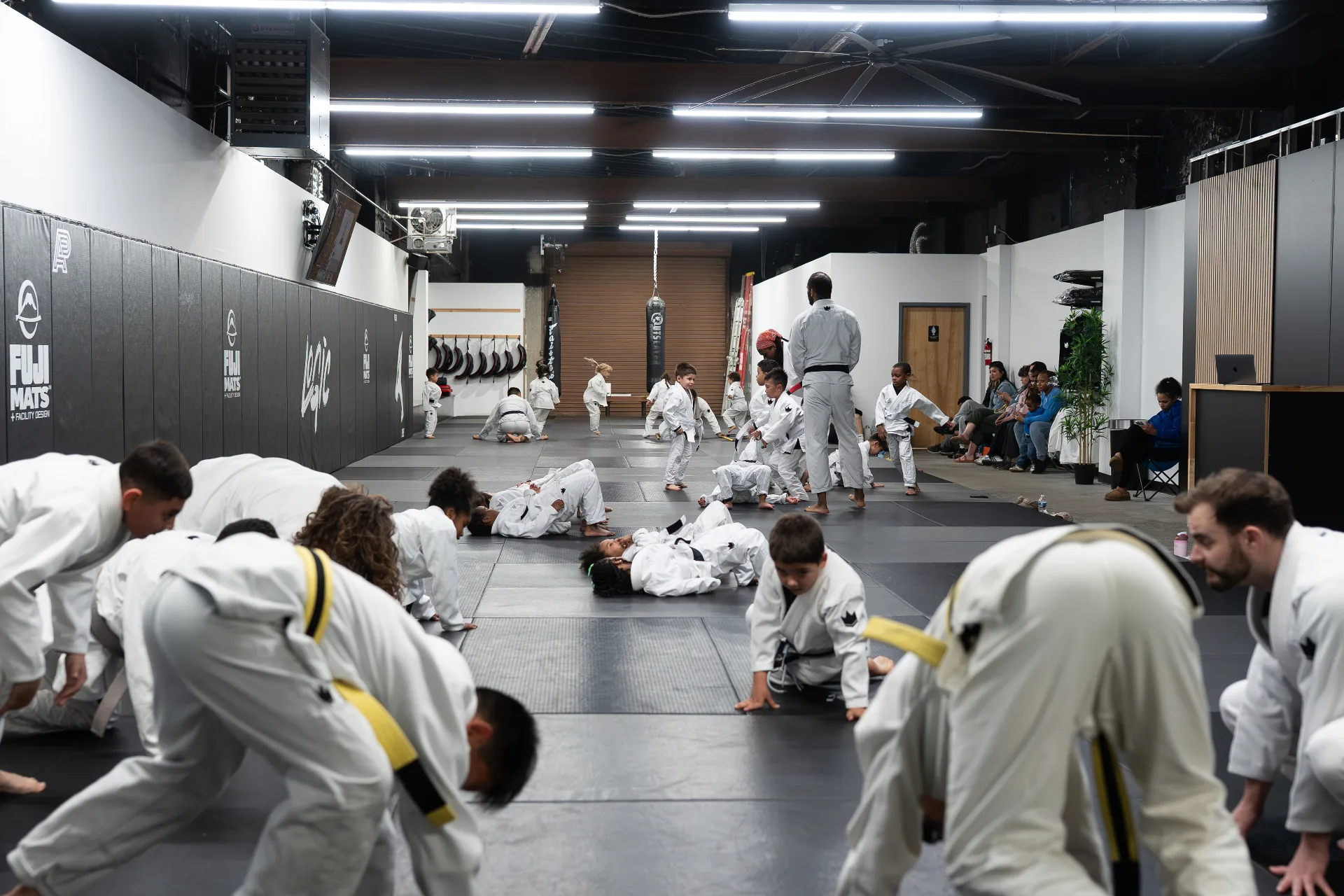
Every kids class at Logic runs 50 minutes, Monday through Thursday. See the full class schedule for exact times. Here's exactly how those 50 minutes break down — the same way a brand-new student walks through them on day one.
Arrive, bow in, warm-up
Kids line up, bow in, and run coach-led movement: shrimps, breakfalls, animal walks, partner tag. The body wakes up. The room sets the tone.
Technique block
A black belt instructor breaks down one specific position — usually an escape or a basic control. Slow demo, partner drilling at low intensity, individual corrections from the coach.
Partner work + games
Position-specific games (king of the mountain, capture the flag, no-arms guard retention). The kids think they're playing. They're drilling jiu jitsu reps for 20 straight minutes.
Cool-down, bow out, parents in
Stretching, a short coach talk about the day's lesson, bow out. Parents are welcome on the floor for the final five minutes to ask the coach anything.
Chapter 05
Is kids BJJ safe?
The short answer: it has one of the lowest injury rates of any organized youth activity. Lower than soccer. Lower than football. Lower than gymnastics.
Kids jiu jitsu has no strikes to the head. No headers, no tackles, no repeated impact. The dominant injury mechanism in contact youth sports — collisions and head trauma — barely exists in our program.
The few injuries that do happen are usually finger jams or mat burns. Every position has a tap that ends a round instantly. A coach is on the floor every minute of every class.
For Tiny Tigers (4–6), there is no live sparring at all. Juniors (7–9) do position-specific games. Live, supervised rounds are earned — not handed out on day one. For the full safety breakdown, read is jiu jitsu safe for kids.
Every instructor on our kids mats is SafeSport Certified — the U.S. Olympic child-safety standard. Our team is IBJJF Registered and background checked before they ever coach your child. Most gyms don't do this. We won't operate any other way.
0
Strikes to the head
1:1
Coach attention during class
100%
Mats disinfected after every class
Every
Position has a tap
Chapter 06
The no-bench rule.
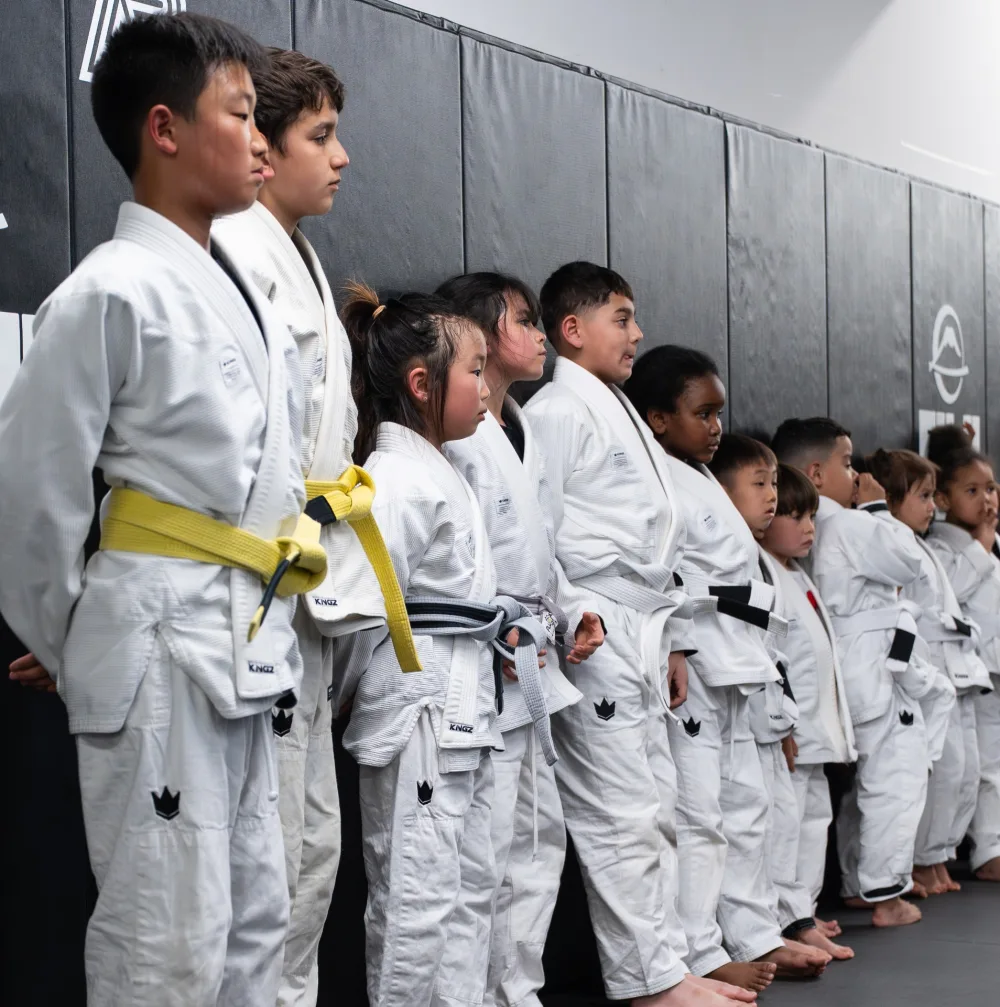
Every kid trains. Every kid has a partner. Every kid drills. No one sits out for being small, slow, new, or quiet.
This sounds basic until you watch a youth soccer practice where the same three kids touch the ball every drill. On our mat, the worst kid in the room gets the same coaching minutes as the best one. That's the deal.
Chapter 07
What it actually changes.
Not the marketing version. The version parents tell us about at the front desk after six weeks.
Focus
They learn to listen, wait their turn, follow directions, and solve problems under pressure. Teachers notice it at school.
Confidence
Confidence here is earned through skill — not given. Quiet kids start to walk differently inside a few months.
Regulation
Kids with ADHD, anxiety, or sensory needs often thrive on the mat. Predictable rules, immediate feedback, physical pressure — exactly what their nervous system needs.
Resilience
They lose. They reset. They try again. Then they stop crying about losing anywhere in life. The mat is the safest place to learn this.
Chapter 08
BJJ vs every other kids activity.
An honest comparison — including the activities BJJ doesn't beat on every metric. You can make an informed choice instead of a marketed one.
| Sport | Contact level | Injury rate | Discipline built in | Bullying resilience |
|---|---|---|---|---|
| Kids BJJ Grappling + control | No strikes to the head | Very low (lower than soccer) | High — built into every class | Strongest record — control without violence |
| Karate Striking + forms | Light contact strikes | Low | High (varies by school) | Good for confidence, weaker for de-escalation |
| Taekwondo Kicking + forms | Light to moderate strikes | Low to moderate | High in traditional schools | Good for confidence |
| Wrestling Takedowns + pins | High impact, no submissions | Moderate | High | Strong — similar to BJJ |
| Soccer Team sport | Collisions, headers | Higher than BJJ for kids | Team-based | Indirect (team dynamics) |
| Football Contact team sport | Repeated high-impact collisions | High (head impact concerns) | Team-based | Mixed |
| Gymnastics Body control | No contact | Moderate (overuse) | Very high | Indirect |
Chapter 09
The honest answer on bullying.
Bullies pick targets they can dominate. A kid who can quietly control any peer on the ground — without striking, without escalation — stops being a target. We've watched it happen hundreds of times.
But the deeper truth is this: jiu jitsu kids don't become bullies either. The kids who bully are the ones who feel powerless. Jiu jitsu solves the powerlessness without ever needing to use it.
They learn control. They learn that getting tapped is fine. They learn that winning quietly is more powerful than winning loudly. Then they go to school and just… don't get pulled into the drama.
"He came home and told me a kid pushed him at recess. He said, 'It's fine, Mom. I knew I could handle him, so I just walked away.'"
— Parent of a 9-year-old Logic student
Chapter 10
Who teaches the room.
Kids are not handed to random helpers. The room is run by black belts with adult supervision on the floor every class.
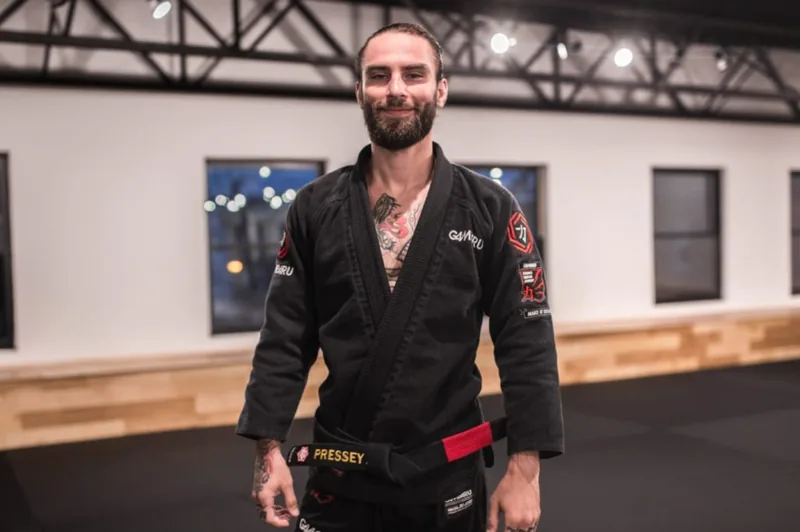
Dennis Pressey Jr.
Black Belt · Head Instructor & Owner
Black Belt under Kristian Woodmansee, co-awarded with JT Torres. Built the kids program from scratch so kids get the same standard the adults do — no babysitting, no bench.
Read more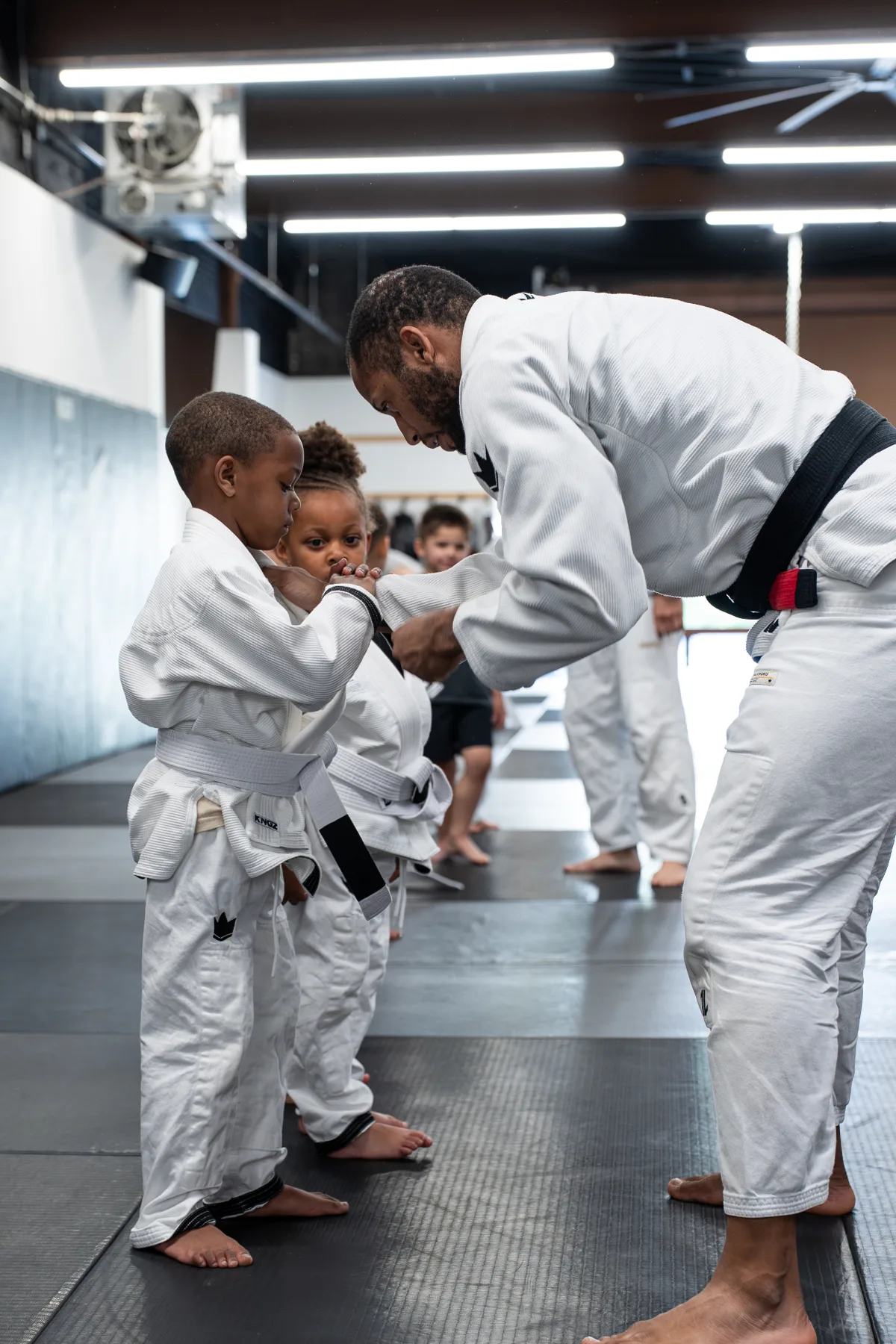
Markee McCrimmon
Black Belt · Kids Lead
Lost 60 lbs and earned his black belt at Logic. Kids gravitate to him because he leads with patience, not volume.
Read more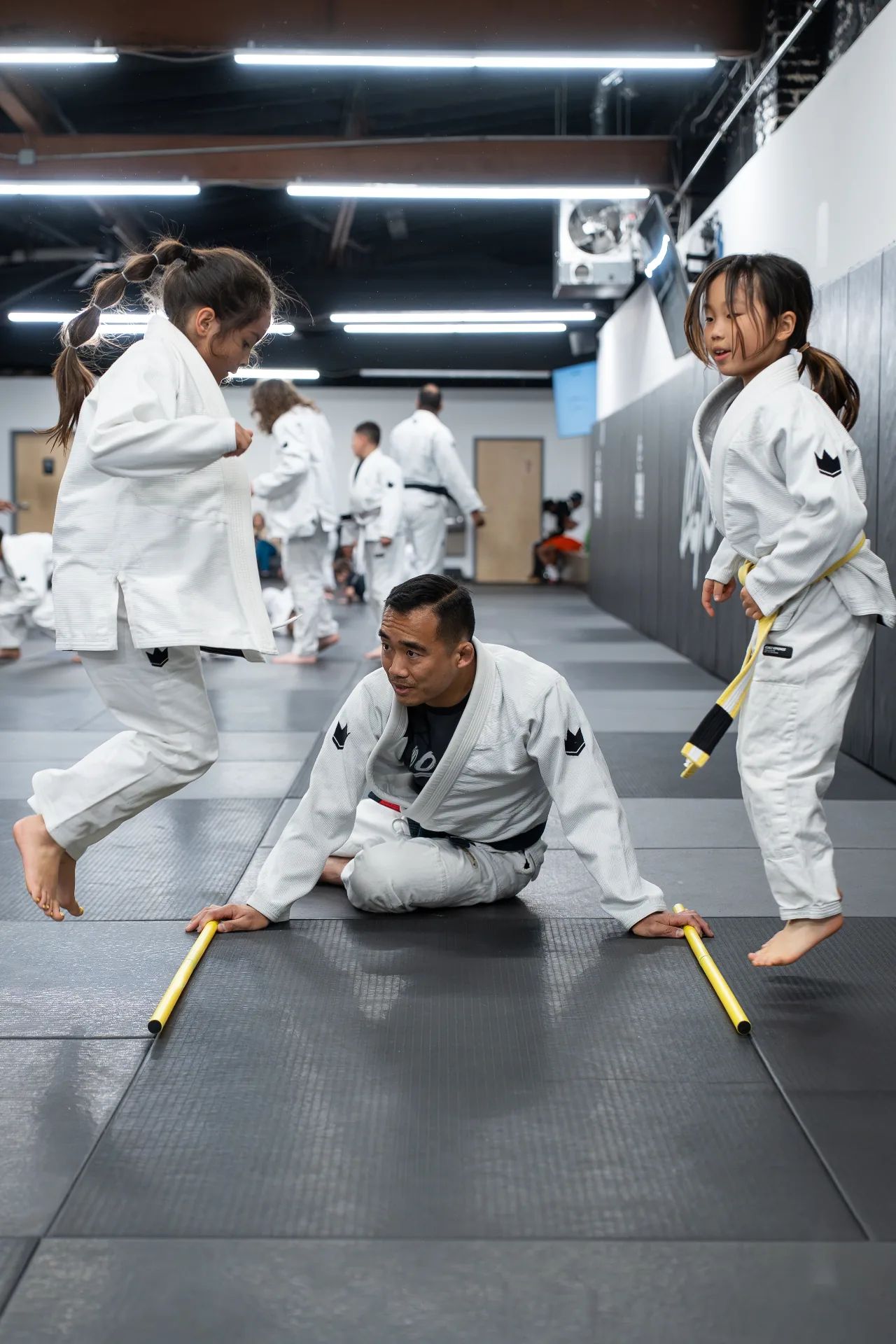
Matt Rong
Black Belt · Kids Lead
Breaks complex movement into pieces a six-year-old absorbs without losing technical integrity. Parents notice the confidence shift within weeks.
Kids program assistant coaches
Shavana Jones
Purple Belt
Jamal Hughes
Blue Belt
Phil Sawicki
Blue Belt
Pat Hilley
Blue Belt
Chapter 11
Uniform, hygiene & parent rules.
- Uniform is included in the $69 intro — gi, belt, and rashguard, theirs to keep from day one.
- Nails trimmed. Long hair tied back. No jewelry on the mat.
- Showers on site. Kids wash hands before class. Mats disinfected after every class.
- Skin conditions (ringworm, staph, impetigo) require sitting out until cleared. IBJJF hygiene standards.
- Parents welcome on the viewing bench for the entire class, and on the floor for the last five minutes.
Chapter 12
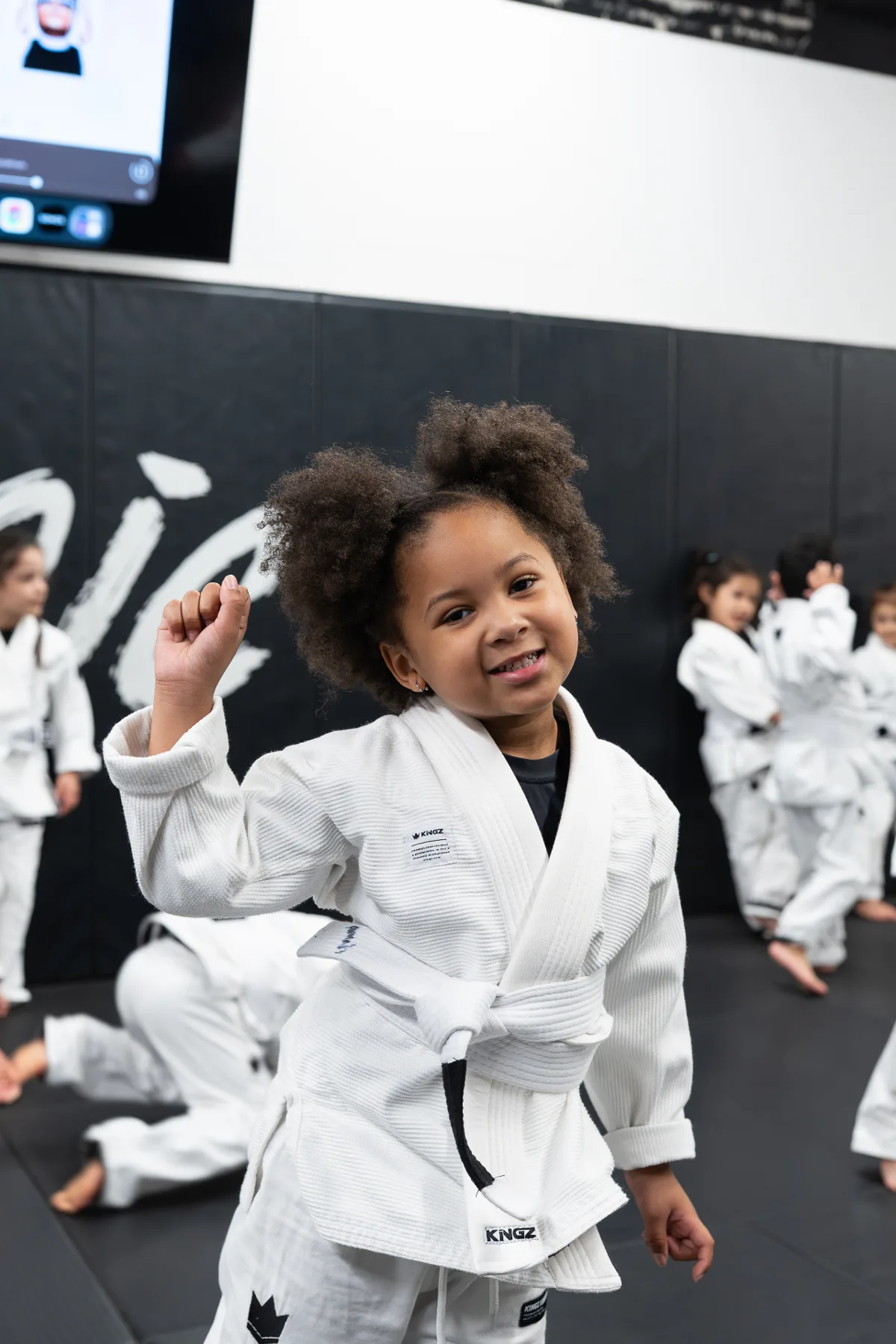
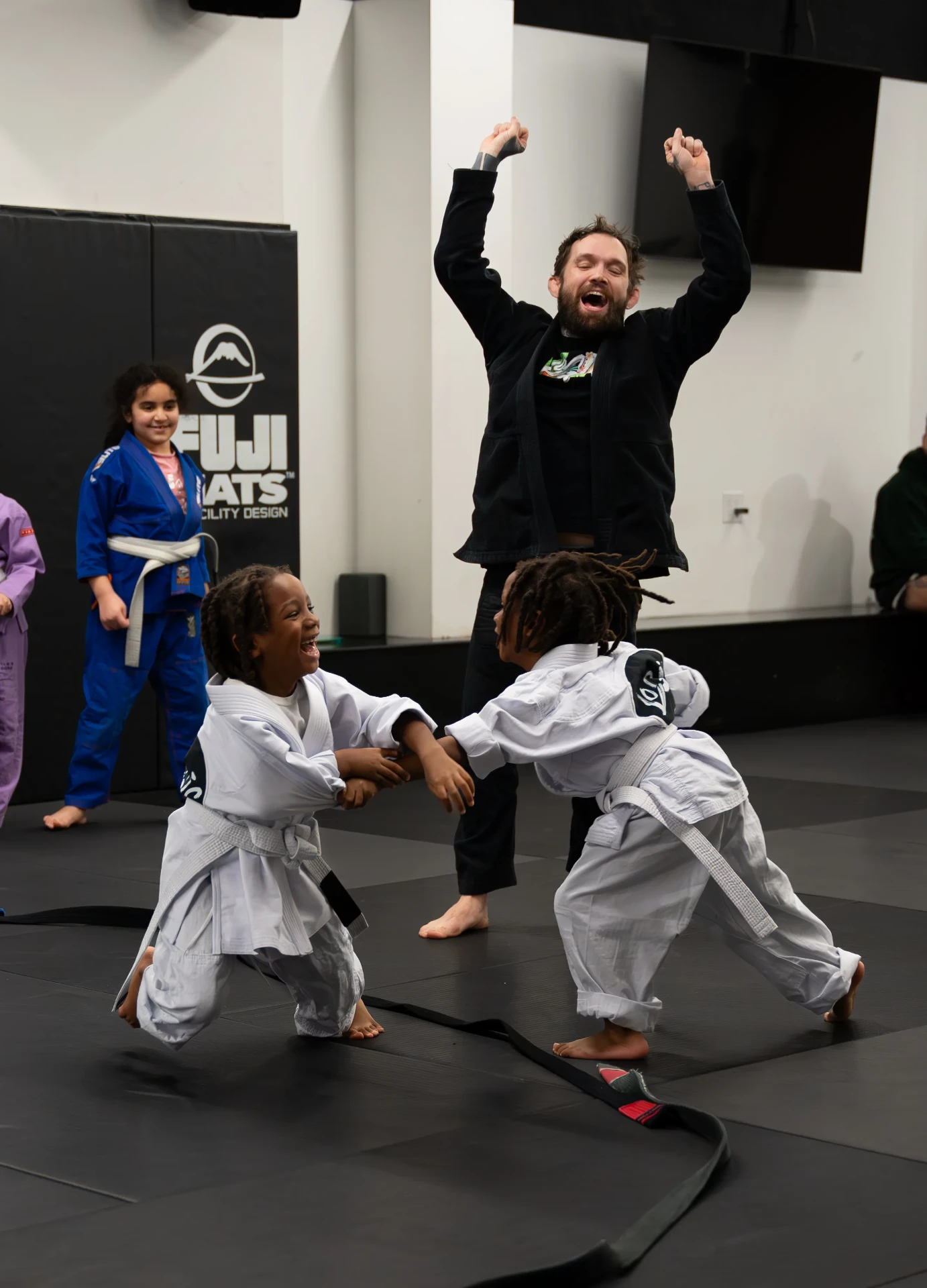
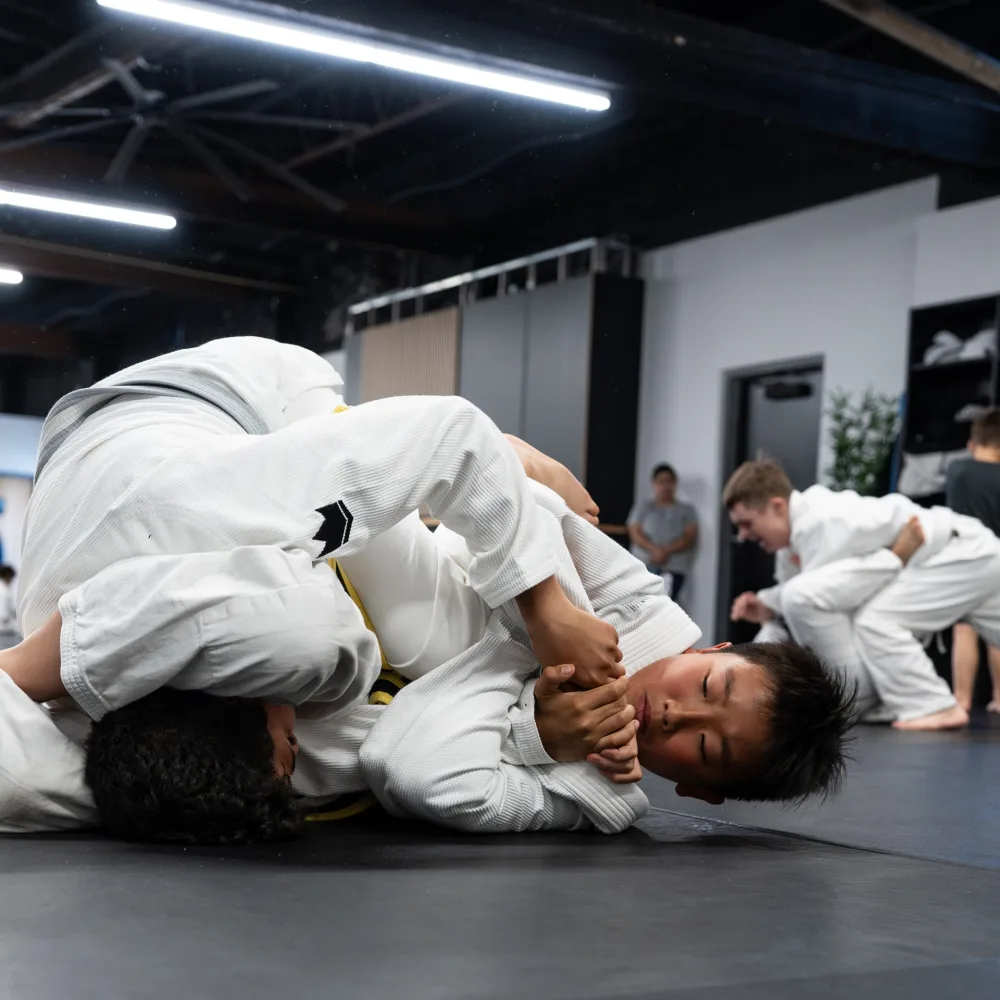
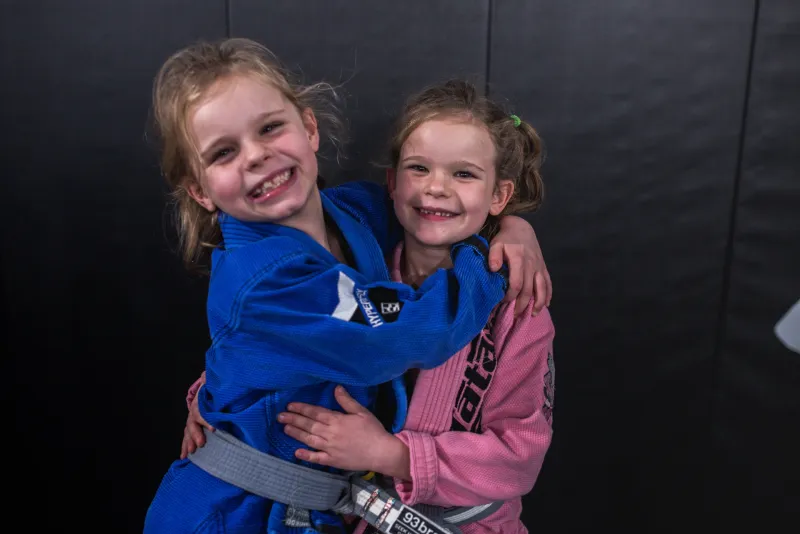
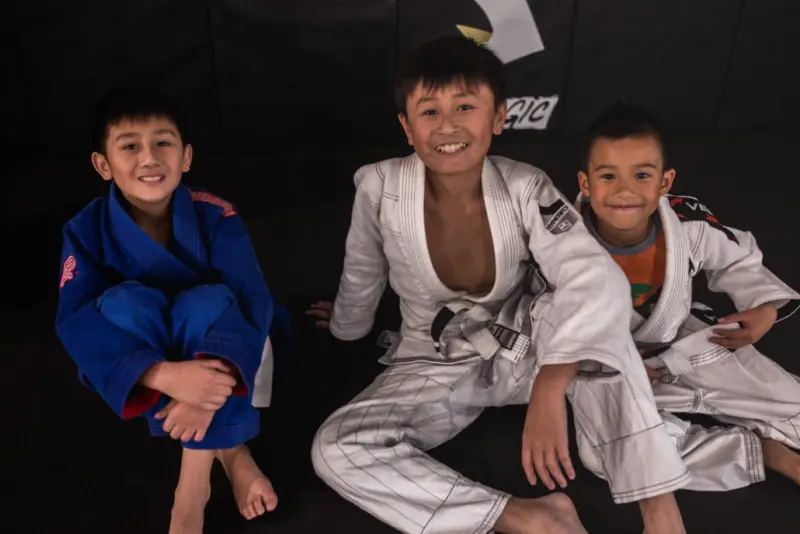
Watch a class.
Real footage from the Logic kids room. No actors. No edits to hide the unpolished moments — those are the point.
Chapter 13
Kids jiu jitsu in Philadelphia.
Logic is at 1360 N American St, Philadelphia, PA 19122. Free on-site parking. Convenient to every kid-dense neighborhood in North and Center Philadelphia.
Fishtown
Walk
Northern Liberties
5 min
Old City
8 min
Port Richmond
10 min
Brewerytown
12 min
Center City
12 min
Fairmount
12 min
Chapter 14
How to start your child.
We don't run single free trial classes for kids. One class is mostly nerves and tells you nothing. Instead, the intro runs 14 days of coached classes for $69, uniform included (gi, belt, rashguard, theirs to keep). Groups start every Monday and are capped at 8 kids.
- 01Read the program pageFull details of the 14-day intro — schedule, what's included, the exact next step.
- 02Reserve their spot — $6914 days of coached kids classes for $69, uniform included — gi, belt, rashguard, theirs to keep. No auto-renew. Groups start every Monday, capped at 8.
- 03Decide together at day 14If it's a fit, your child moves into an ongoing membership starting at $49/week. If it's not, you've lost two weeks — not a year.
Free 2-Week Trial
14 days for $69 · Uniform included · Coached by black belts. Groups start every Monday, capped at 8.
Claim Your Free 2-WeeksChapter 15
Every question, answered.
28 questions across safety, behavior, logistics, and how kids BJJ compares to other activities. If your question isn't here, it should be — tell us.
Safety
Behavior & discipline
Logistics
Comparisons
Send them somewhere that demands more from them.
14 days of coached classes for $69, uniform included. Groups start every Monday, capped at 8 kids. That's where you start.
Claim Your Free 2-Weeks