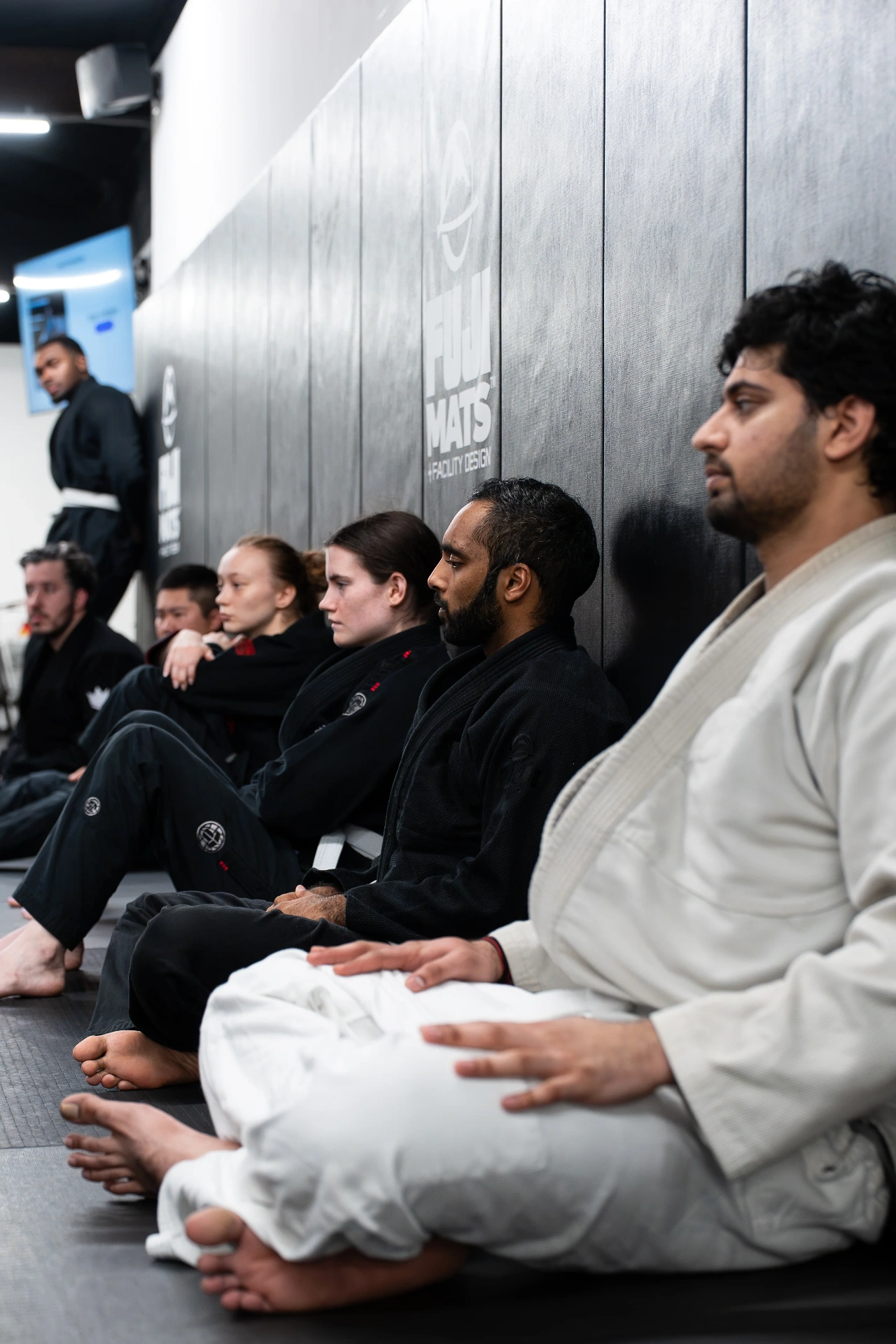
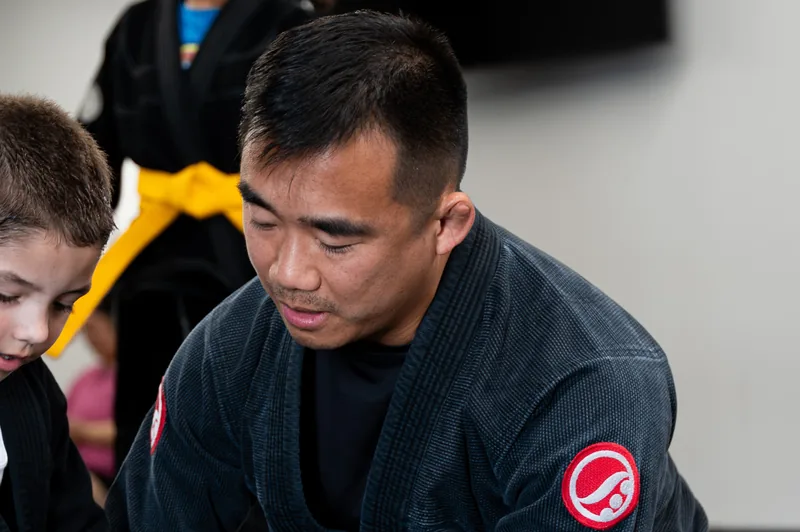
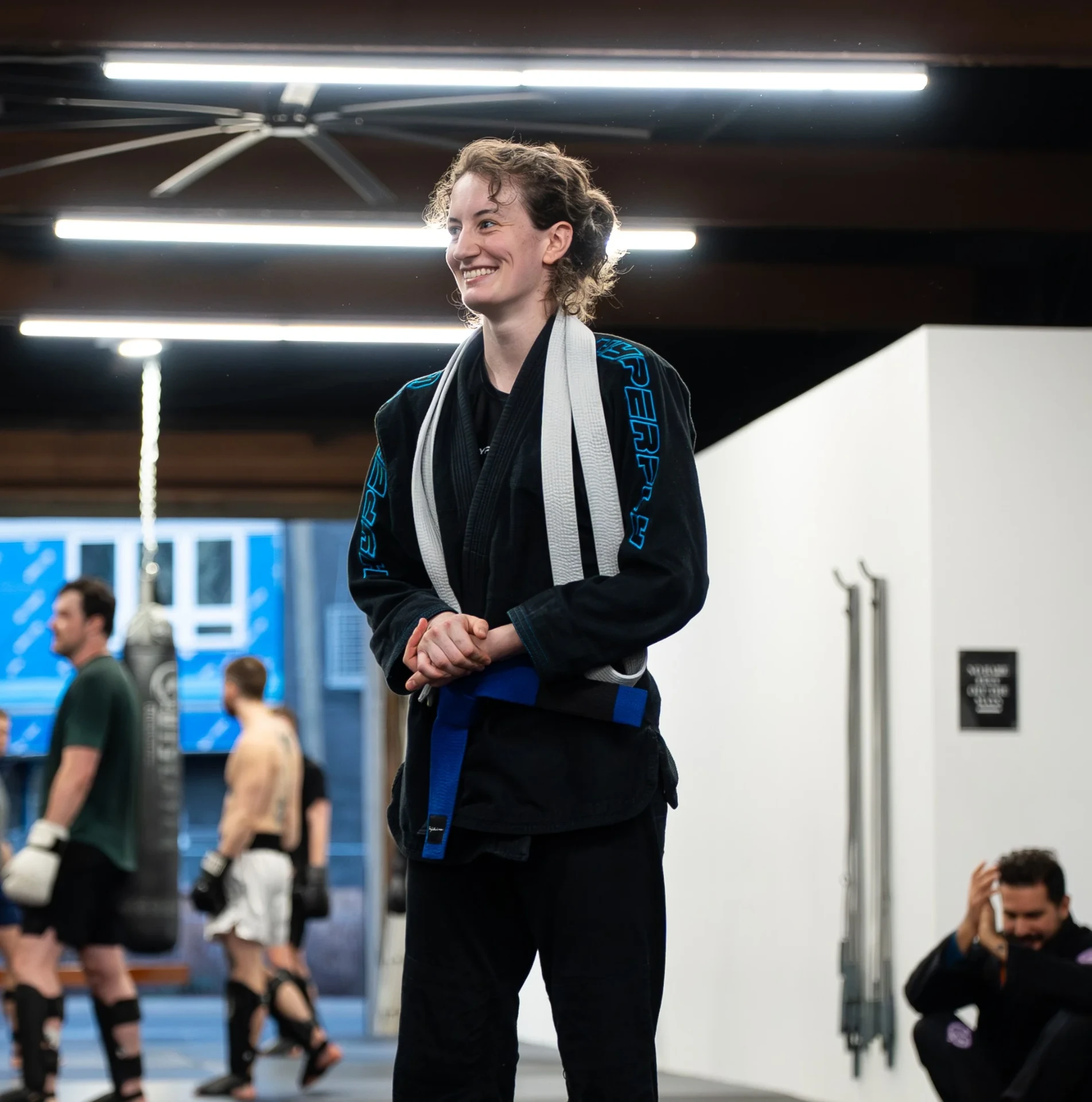
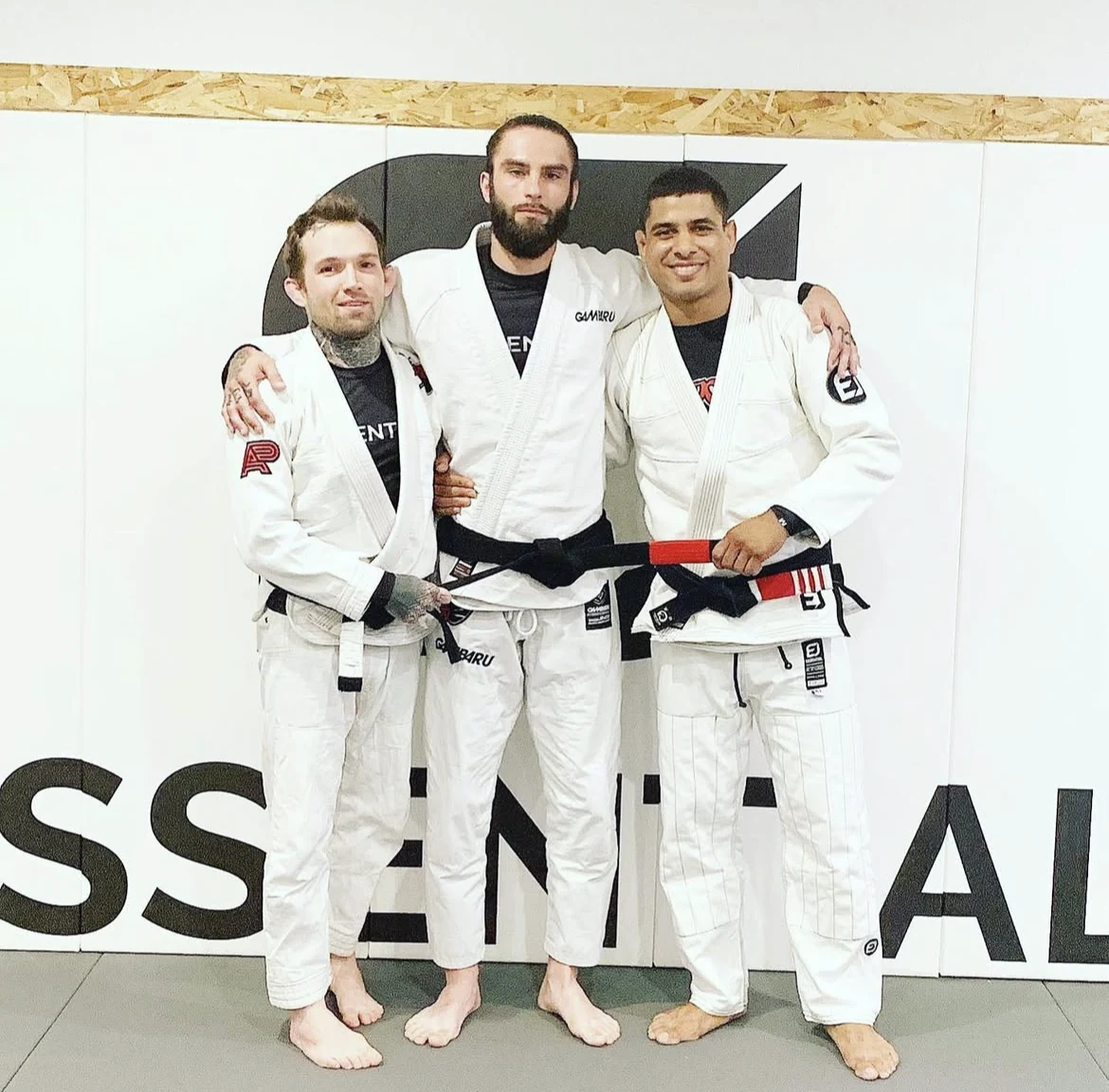
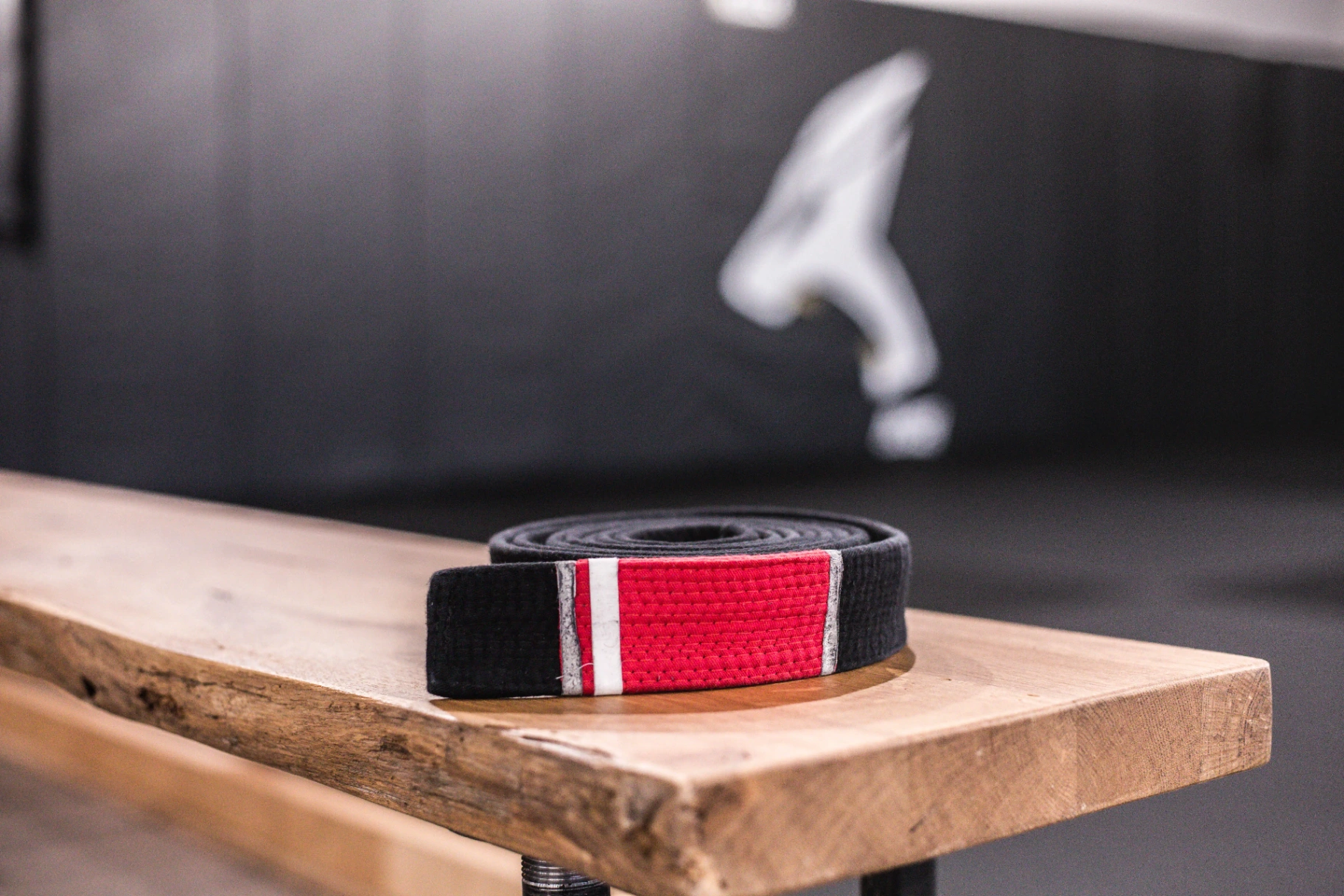
White belt students drilling Brazilian Jiu Jitsu at Logic Philadelphia
    The Complete Beginner's Guide

    Brazilian
    Jiu Jitsu.
    Philadelphia. Everything you need to know.

    What it actually is. Who teaches it here. What a class looks like on day one. Belts, IBJJF standards, uniform, hygiene, safety, and how to start — without buying anything. One page. Every answer.

    By Dennis Pressey Jr.···IBJJF Registered·~14 min read

    Chapter 01

    What is Brazilian Jiu Jitsu?

    Brazilian Jiu Jitsu is a martial art and combat sport built around grappling, ground control, and submission. The goal is not to hit harder. The goal is to control a person — no matter their size — using leverage, timing, and position.

    A smaller, technical practitioner can routinely control a larger, untrained opponent. That single fact is why BJJ exploded globally after Royce Gracie won the first UFC in 1993, and why it remains the most respected unarmed self-defense discipline on earth.

    Modern BJJ is also a sport — governed internationally by the IBJJF, with a global competition circuit, structured belt system, and uniform standards. Logic teaches the sport version: technical, structured, and pressure-tested in a real room.

    1993

    BJJ enters the global stage at UFC 1

    1M+

    Active practitioners worldwide

    9/1k

    Hours-to-injury rate — lower than soccer

    10–15

    Years to a legitimate black belt

    Chapter 02

    Five positions. A lifetime of depth.

    BJJ has hundreds of techniques. They all live inside five core positions. Tap any one to see what it is, why it matters, and what it feels like to be in it.

    01 / 05Guarda

    Guard

    Where everyone starts.

    On your back, hips up, controlling your opponent with your legs. The single most-trained position in jiu jitsu — and the one that taught the world a smaller person on the bottom can dominate a bigger person on top.

    Did you know

    There are over 30 named variations of guard. You will spend years exploring them. That's the point.

    Chapter 03

    A class, minute by minute

    Every adult beginner class at Logic runs 50 minutes. Here's exactly how those 50 minutes break down — the same way a brand-new student walks through them on day one.

    01 / 040–10min

    Arrive & warm-up

    Sign in, change in the locker room, meet the coach. Mobility, falling, base, and posture drills. The warm-up is the warm-up — not the workout.

    02 / 0410–25min

    Technique block

    A black belt instructor breaks down one position — usually an escape or a fundamental control. You watch, ask questions, drill it slow with a partner.

    03 / 0425–40min

    Partner drilling

    You and your partner take turns executing the technique at low resistance. The goal is repetition and feel, not winning. The coach walks the room and corrects you by name.

    04 / 0440–50min

    Optional positional rounds

    Light, supervised sparring from a specific position. Beginners can opt out without judgment. Coaches scale intensity to your experience.

    Adult Brazilian Jiu Jitsu students lined up after class at Logic Philadelphia

    Chapter 04

    Is it safe?

    The honest answer with the numbers behind it.

    BJJ has one of the lowest injury rates of any combat sport — below boxing, wrestling, judo, and MMA. Published rates put serious injury at roughly 9 per 1,000 training hours. Recreational soccer in adults is higher.

    The reason is simple: every position has a tap. The instant you signal — verbally, by tapping the mat, or by tapping your partner — the round ends. You control when you stop.

    Beginners are paired with experienced partners who know how to control intensity. Coaches scan the floor every round. Live sparring with full resistance is reserved for students who are ready for it — never forced.

    9 / 1k

    Hours-to-injury rate

    0

    Strikes to the head, ever

    100%

    Tap-controlled rounds

    Chapter 05

    Who's actually teaching

    Lineage matters in jiu jitsu because no governing body verifies an instructor's credentials at the gym door. You verify it yourself, by looking up who promoted them. Here is our roster — with the receipts.

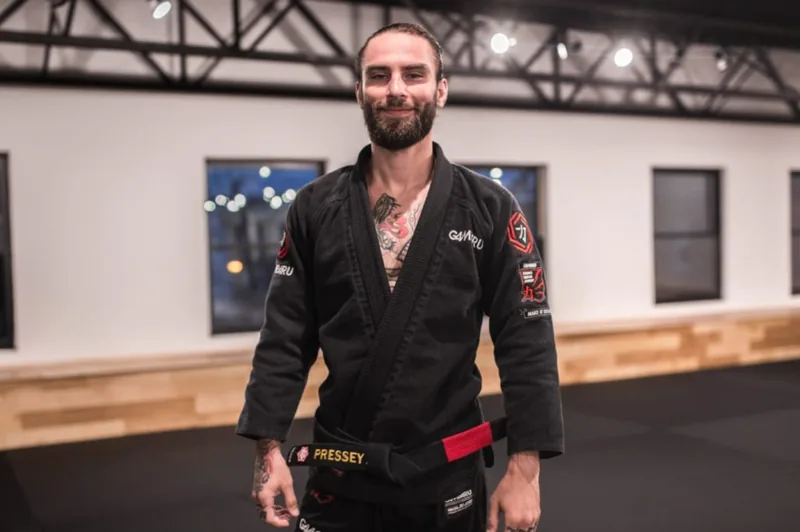
    Dennis A. Pressey Jr. — Black Belt · Head Instructor & Owner

    Dennis A. Pressey Jr.

    Black Belt · Head Instructor & Owner

    Black belt co-awarded by IBJJF World Champion Kristian Woodmansee and JT Torres. Pan American medalist. UFC Fight Pass veteran. 17 years training. Built every program at Logic.

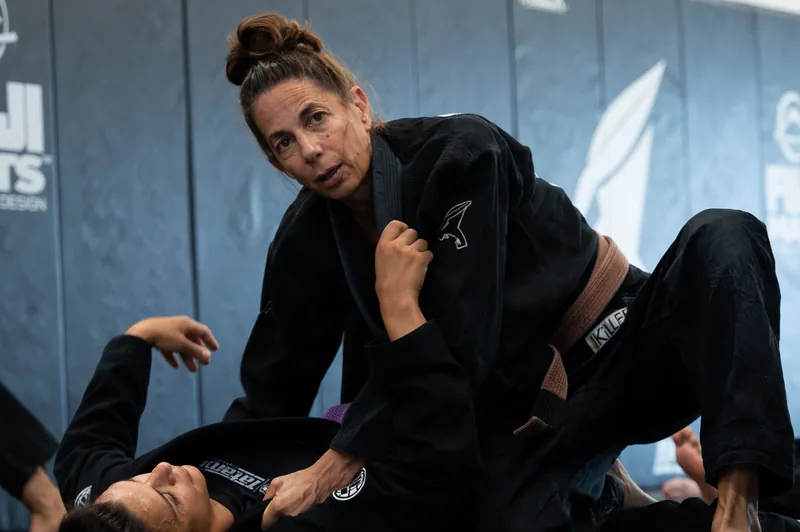
    Gina Mancuso — Black Belt · 2x IBJJF World Champion

    Gina Mancuso

    Black Belt · 2x IBJJF World Champion

    One of the most decorated active female grapplers in BJJ. Leads the Women's program. Coaches beginners and all-levels. The reason 20+ women drive in from across the region.

    Markee McCrimmon — Black Belt · Kids & White Belt Lead

    Markee McCrimmon

    Black Belt · Kids & White Belt Lead

    Lost 60 lbs and earned his black belt at Logic. New students consistently say Markee is the reason they came back for class two. Lived experience, patient coaching.

    Matt Rong — Black Belt · Kids Lead

    Matt Rong

    Black Belt · Kids Lead

    Breaks down complex movement into pieces a six-year-old can absorb without losing the technical integrity. Parents notice the confidence shift within weeks.

    Full roster, belts, and competition history at /instructors · School story at /about · Press kit at /press.

    Chapter 06

    The IBJJF — and why we follow it

    The International Brazilian Jiu Jitsu Federation is the global governing body for BJJ. It sets the official rules used at the World Championships, Pan Ams, European Open, and almost every legitimate competition on earth.

    Logic is an IBJJF-registered school. That matters even if you never plan to compete:

    • Belt promotions follow internationally recognized time-in-grade minimums.
    • Curriculum uses the IBJJF rule set — techniques that work under pressure.
    • Uniform standards meet IBJJF inspection — if you ever compete, your gi is already legal.
    • Instructors are verifiable in the IBJJF database. No fake belts here.

    Our lineage

    1. 01Mitsuyo Maeda
    2. 02Carlos Gracie Sr.
    3. 03Hélio Gracie
    4. 04Rolls Gracie
    5. 05Romero "Jacaré" Cavalcanti
    6. 06Fabio Gurgel
    7. 07André Galvão (ATOS)
    8. 08Kristian Woodmansee
    9. 09Dennis Pressey Jr.

    Dennis Pressey Jr.'s black belt was co-awarded by IBJJF World Champion Kristian Woodmansee and JT Torres — a direct line from Maeda through Carlos Gracie Sr. to one of the most respected modern ATOS lineages.

    Chapter 07

    Belts, stripes & honest timelines

    The adult BJJ belt system is intentionally slow. That's the feature, not the bug. A blue belt is hard-earned. A black belt is roughly a decade of consistent training.

    White Belt
    Survival. Escapes. Learn to tap.
    Day 1 → ~18 months
    Blue Belt
    A real grappler. Can handle untrained people effortlessly.
    ~2–4 years total
    Purple Belt
    Dangerous. Building a personal game.
    ~4–7 years total
    Brown Belt
    Expert. Refining everything.
    ~6–10 years total
    Black Belt
    Mastery — and the start of teaching.
    ~10–15 years total

    Each belt carries four stripes earned over time. Promotions happen at scheduled ceremonies — not random Fridays. Anyone offering you a faster path is selling you a fake belt.

    Blue belt promotion at Logic Jiu Jitsu PhiladelphiaPurple belt promotion at Logic Jiu Jitsu PhiladelphiaBlack belt instructors at Logic Jiu Jitsu Philadelphia

    Chapter 08

    BJJ vs everything else

    Every grappling and combat art has its strengths. Here's how BJJ honestly stacks up against the most common alternatives an adult considers.

    BJJ
    Grappling + submissions
    Built around
    Leverage over strength
    Contact level
    Controlled — no strikes
    Learning curve
    Slow, deep, compounding
    Self-defense value
    Elite (ground control)
    Wrestling
    Takedowns + control
    Built around
    Explosive power
    Contact level
    High impact
    Learning curve
    Fast — physical first
    Self-defense value
    Strong (standing)
    Judo
    Throws + pins
    Built around
    Grip + balance
    Contact level
    High impact throws
    Learning curve
    Steep early curve
    Self-defense value
    Strong (clothing engagement)
    Boxing / MMA
    Strikes (and grappling)
    Built around
    Athleticism
    Contact level
    Brain trauma risk
    Learning curve
    Variable
    Self-defense value
    High — but expensive

    BJJ's edge isn't that the other arts are bad. It's that BJJ is the most accessible, longest-scaling, and lowest-impact way to learn real grappling — for an adult with a job, a body, and a few decades left to enjoy it.

    Chapter 09

    Uniform & gear

    You do not need to own a gi to take your first class — we provide one. After that, the standard at Logic is the Kingz brand, in either black or white only. The reason is uniformity (the room looks like a team), durability (a Kingz gi lasts years), and IBJJF compliance (it passes inspection at every competition).

    For no-gi training, the standard is a Logic rashguard plus approved board shorts or spats. Loose t-shirts are not permitted — they catch fingers and toes and cause injuries.

    Full uniform policy, brand list, and what's allowed at competition lives at /policies/uniform.

    Chapter 10

    Hygiene & mat etiquette

    BJJ is a contact sport. Hygiene is not optional. These rules protect every person in the room — including you.

    Fingernails and toenails trimmed short. Always.
    Shower before class if you came from work or the gym.
    Shower immediately after class — we have showers on site.
    Any visible skin issue means sitting out until cleared.
    No shoes on the mat. No socks during rolling.
    Remove all jewelry, watches, earrings, piercings.
    Wash your gi after every single class. No exceptions.
    Bow or shake hands before and after every round.

    Chapter 11

    Gi vs No-Gi

    Gi

    Slower. More technical. The collar and sleeves create grips that force you to learn position, patience, and frames. Most legitimate schools — Logic included — recommend the gi first.

    Best for: long-term skill, technical depth, IBJJF competition.

    No-Gi

    Faster. More athletic. No collars or sleeves — control comes from underhooks, body-lock, and pressure. Closer to wrestling, MMA, and submission grappling.

    Best for: athleticism, MMA crossover, scrambles and pace.

    The honest recommendation: start in the gi. Add no-gi after six months. Most Logic members eventually train both — they teach each other things the other can't.

    Chapter 12

    BJJ in Philadelphia

    Logic is at 1360 N American St, Philadelphia, PA 19122 in South Kensington, with free private parking. Most of Philadelphia's neighborhoods are inside a 15-minute drive.

    Fishtown

    5 min

    South Kensington

    Walk

    Northern Liberties

    5 min

    Old City

    8 min

    Port Richmond

    10 min

    Brewerytown

    12 min

    Center City

    12 min

    Fairmount

    12 min

    Get directions

    Chapter 13

    Done reading? Take the tour.

    Twenty minutes. Meet the coaches, walk the mats, see a class in motion, and ask every question on your list. No pressure, no pitch, no contract.

    Take a tour & meet the coaches

    Or jump to: About Logic · Instructors · Best BJJ in Philly

    Chapter 14

    Every question, answered

    24 of the most common questions adults ask before stepping on the mat — grouped by what's keeping them out.

    01Getting started

    No. Most adults at Logic start between 28 and 55. BJJ is built around leverage, not athleticism — which is exactly why it scales across decades. Our oldest active white belt started at 61.

    No — and trying to get in shape first is the #1 reason adults never start. Jiu jitsu gets you in shape. The beginner program is built so a deconditioned 40-year-old can keep up from day one.

    Zero. Beginners are taught from the foundation — how to fall, how to base, how to escape, how to tap. Experience is not an advantage in the first six weeks; willingness to show up is.

    Fifty minutes. Warm-up and movement drills, technique instruction from a black belt, partner drilling at a slow pace, then optional light positional sparring. You will not be thrown into a competition round on day one.

    Two to three times per week is the sweet spot. One time per week works for maintenance but slows progress. Four or more is unnecessary in the first six months — recovery is part of the program.

    No. We provide everything you need. You'll be in a clean loaner gi or athletic clothes. You only purchase your own gi once you've decided you want to keep training.

    02Safety

    BJJ has one of the lowest injury rates of any combat sport — below boxing, MMA, judo, wrestling, and even recreational soccer in adults. The reason: every position has a tap. You control when a round ends.

    Tap. Loudly, verbally, or by tapping the mat or your partner. The round ends instantly. Coaches scan the floor every round. Beginners are paired with experienced partners who know how to control intensity.

    Tell the coach before class. Every technique has a scaled version. Adults with prior injuries make up a meaningful share of our membership — jiu jitsu, trained intelligently, often improves chronic issues rather than worsening them.

    Mats are disinfected after every class. Showering immediately after training is the single biggest factor in avoiding skin issues — we have showers on site. Any visible skin condition (ringworm, staph, impetigo, herpes) requires sitting out until cleared.

    Yes. The room is run by professionals. Inappropriate behavior is not tolerated. We also run dedicated Women's classes coached by 2x World Champion Gina Mancuso — see /womens-jiu-jitsu.

    Probably not. Beginners are taught how to defend and escape positions before chokes are even introduced. When you do learn submissions, your partner releases the instant you tap — and they tap too. That's the deal.

    03Belts & IBJJF

    Most adults reach blue belt in 18 to 36 months of consistent training (2–3 times per week). There is no minimum time, but legitimate schools — including ours — follow IBJJF recommended timelines.

    Ten to fifteen years is the realistic average. Anyone selling you a faster path is selling you a fake belt. Logic is led by Dennis Pressey Jr., a black belt co-awarded by IBJJF World Champion Kristian Woodmansee and JT Torres.

    The International Brazilian Jiu Jitsu Federation is the global governing body for BJJ. It sets the official rules, belt and stripe standards, and competition formats used worldwide. Logic is IBJJF registered and follows IBJJF standards for promotions, rank, and class structure.

    No. The vast majority of our adult members never compete and never plan to. We train for skill, fitness, and the room — not for medals. Competition is available and supported for the students who want it.

    Each belt carries four stripes earned through attendance, skill, and time. Promotions happen at scheduled ceremonies, not random Fridays. You will always know roughly where you stand because the curriculum is structured and feedback is given directly.

    They're earned to IBJJF standards. That means our blue belts can compete at IBJJF Pan Ams or Worlds and not be out of place. We don't hand out belts to retain members — we promote students because they've earned it.

    04Gear & etiquette

    Gi. The gi forces you to learn fundamentals — grips, frames, patience. No-gi is faster and more athletic — easier to enjoy early, harder to learn deeply. Start in the gi; add no-gi later.

    Logic's standard is the Kingz brand in black or white only. The reason: uniformity, durability, and the fact that Kingz holds up to IBJJF inspection at every competition. Full uniform policy at /policies/uniform.

    Nails trimmed short. Shower before class if you've been working all day. No shoes on the mat — ever. No jewelry, no watches. Step off the mat to drink water or take a phone call. Bow or shake hands before and after every round.

    No. A tap is a reset, not a loss. The students who progress fastest are the ones who tap early and often in their first year. Stubbornness against the tap is the most common cause of preventable injury.

    Nails must be trimmed. Long hair must be tied back. Earrings, necklaces, rings, and watches must come off before stepping on the mat. These are non-negotiable safety standards.

    Athletic clothes you can move in, a water bottle, and flip-flops or sandals for walking off the mat. We provide a loaner gi and everything else. Park free in our private lot at 1360 N American St.