
Is Jiu Jitsu Safe for Kids? A Parent's Complete Guide
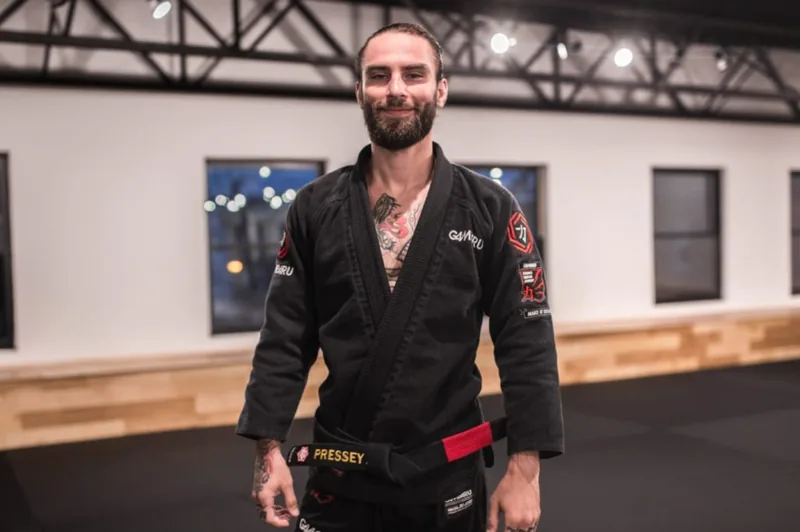
Dennis Pressey Jr.
Black Belt · Head Instructor & Owner, Logic Jiu Jitsu Philadelphia
Short answer
Yes — jiu jitsu is one of the safest organized sports a child can do. It contains no punching, no kicking, and no strikes to the head, which removes the two mechanisms behind most serious youth sport injuries: head impact and high-speed collision. Training happens on cushioned mats, partners are matched by size and age, a coach stands over every round, and any child can stop any technique instantly by tapping.
That is the answer. Below is the reasoning, the honest injury picture, how a well-run kids program is actually structured, and what to look for when you walk into any gym in Philadelphia — ours or someone else's.
Parents ask us this almost every day at Logic Jiu Jitsu in Fishtown. It deserves a real answer, not a sales pitch.
Understanding Your Safety Concern
Parents worry about martial arts because they imagine punching, kicking, and violent takedowns. They picture their child coming home with black eyes and bloody noses.
That's completely understandable—but that's not what jiu jitsu is.
Why Jiu Jitsu Is Different From Striking Arts
Brazilian Jiu Jitsu is fundamentally different from arts like karate, taekwondo, or boxing. There is no punching. No kicking. No strikes to the head.
Instead, jiu jitsu focuses on:
- ✓Grappling and control — learning to manage distance and position safely
- ✓Joint locks and submissions — applied gradually with full control
- ✓The "tap out" system — anyone can immediately stop the action by tapping
This means your child learns effective self-defense without the head trauma risks associated with striking sports.
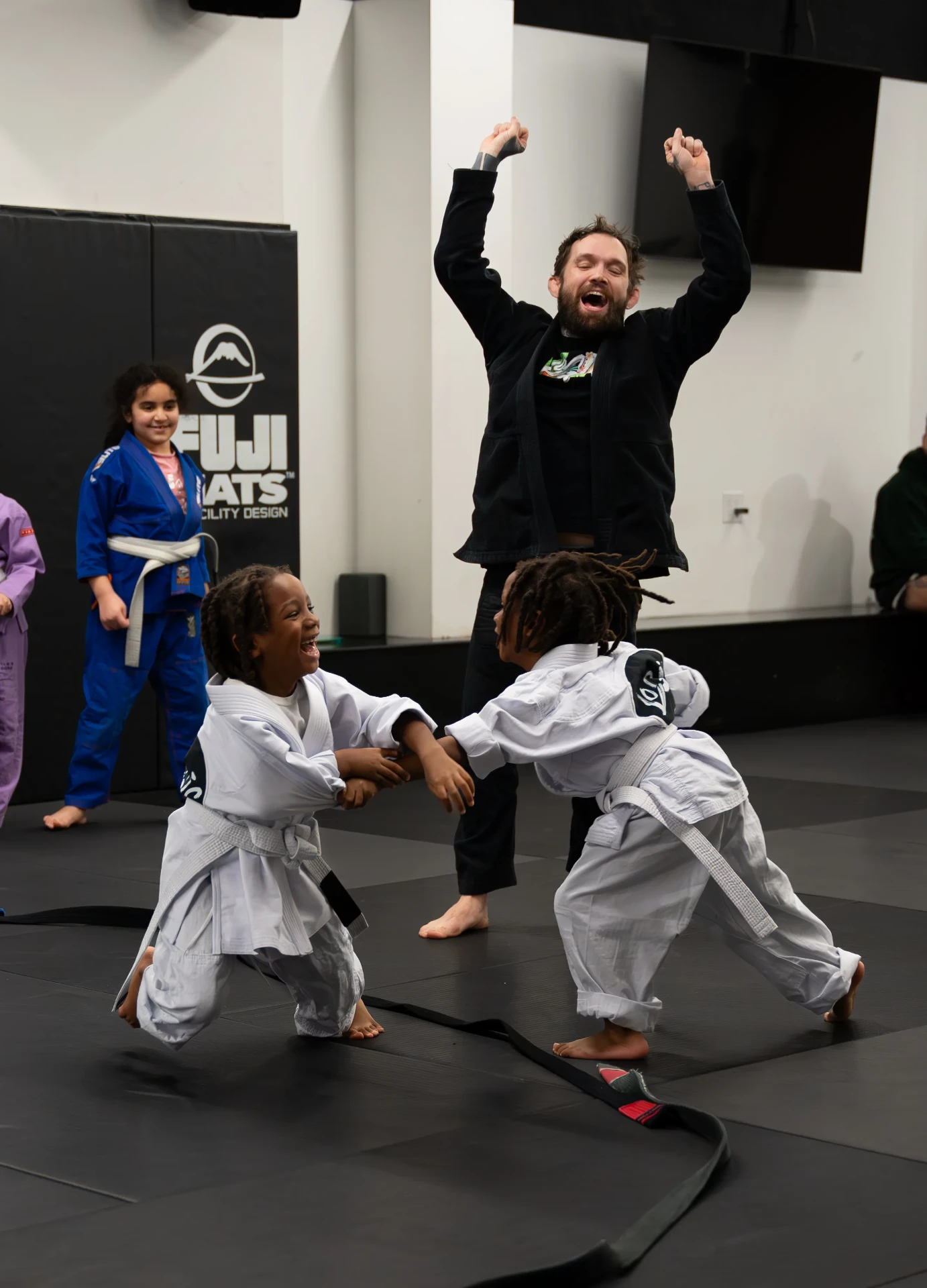
Supervised sparring at Logic — learning happens through play and controlled practice.
How We Keep Kids Safe at Logic
Safety isn't accidental—it's built into everything we do. Here's the system:
Qualified Instructors With Child Development Training
Our coaches are background-checked, certified, and specifically trained to work with children of all ages and abilities.
Age-Appropriate Techniques
Ages 4–6 train movement, balance, body control, and games. No joint locks and no chokes are taught to that age group at all. Technique is layered in by stage, not by birthday.
Controlled Sparring With Active Supervision
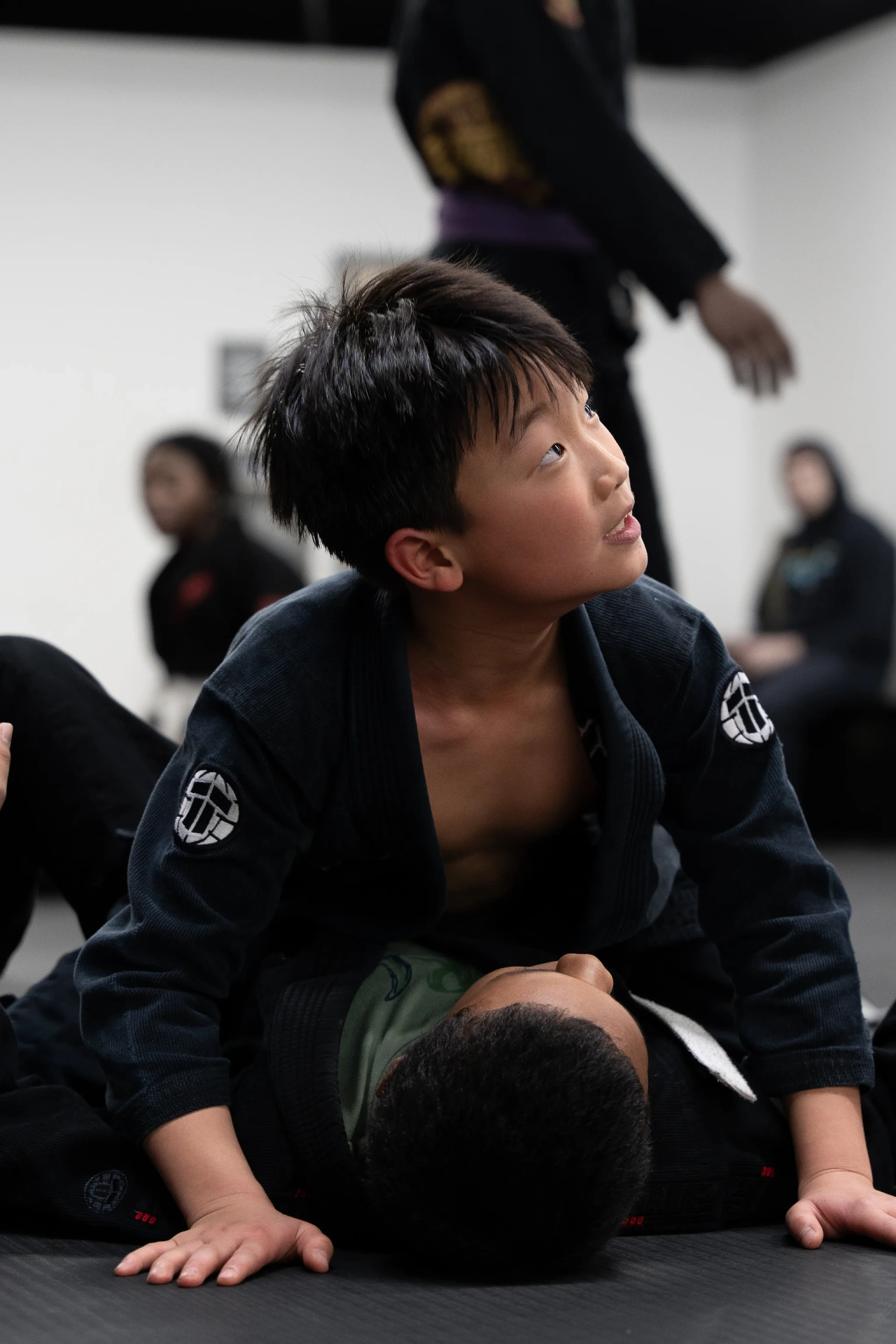
Every sparring session is closely monitored. We match kids by size, age, and skill level. Coaches are always within arm's reach.
Proper Equipment and Facilities
Professional-grade mats cushion falls. Clean, climate-controlled training space. No exposed corners or hazards.
A Culture of Respect and Care
We teach kids to look out for each other. Rough or reckless behavior isn't tolerated. The older kids model good behavior for the younger ones.
What a Kids Class Actually Looks Like, Minute by Minute
Most safety fear comes from not knowing what happens once the door closes. Here is the full 50 minutes, in order, so you can picture it before you ever walk in.
| Minutes | What happens | Why it's safe |
|---|---|---|
| 0–5 | Line up, bow in, nail and jewelry check, mat rules restated | Trimmed nails and no jewelry prevent most scratches and snags |
| 5–15 | Warm-up: shrimping, rolls, animal movements, tag-style games | Teaches how to fall and land before anything is done to them |
| 15–30 | One technique taught, then drilled slowly with a partner — no resistance | Coach demonstrates, then walks pair to pair correcting pressure |
| 30–42 | Positional rounds: start from one position, reset every 90 seconds | Size-and-age-matched pairs, coach within arm's reach, tap stops everything |
| 42–50 | Cool down, one lesson of the day, stripes or shout-outs, bow out | Ends calm — kids leave regulated, not wound up |
Three things never happen in that 50 minutes: no strikes of any kind, no unsupervised rounds, and no pairing a big kid against a small one. Parents watch all of it from the viewing area.
The Parent Safety Checklist — Use It on Any Gym
Take this with you, including to us. If a gym can't answer these clearly, that's your answer.
- ☐"Are your coaches background checked and SafeSport certified?" Ask to see it, not hear about it. Every instructor at Logic is both.
- ☐"Can I stay and watch every class?" Any hesitation here ends the conversation.
- ☐"How many kids per coach, and how are partners matched?" Our groups cap at 8 and pairs are matched by size and age.
- ☐"At what age do you introduce joint locks and chokes?" If the answer is "4," walk out.
- ☐"How often are the mats cleaned?" Skin infections are the realistic risk in grappling, not broken bones. Ours are cleaned daily.
- ☐"What happens when a kid gets rough?" There should be an immediate, boring answer: pulled from the round.
- ☐"Does my child spar on day one?" A beginner group should start with movement and drilling, not live rounds.
- ☐Watch the kids' faces. They should look focused and happy. Fear is visible, and it's disqualifying.
Two habits at home cover the rest: shower after class and wash the uniform every single time, and keep nails trimmed short. That handles skin issues and scratches — the two things we actually see.
How Jiu Jitsu Compares to the Other Sports Your Kid Could Play
Injury risk in youth sports is driven mostly by two things: impact to the head and collisions at speed. Judge any sport by whether those two mechanisms exist in it.
| Sport | Head impact? | High-speed collision? | Typical injuries |
|---|---|---|---|
| Jiu Jitsu (kids) | None — no strikes allowed | No — grappling from close range on mats | Mat burn, bruises, jammed fingers, soreness |
| Tackle football | Yes — repeated | Yes — core to the sport | Concussion, shoulder, knee |
| Soccer | Yes — heading and head-to-head | Yes — sprint collisions | Ankle sprain, ACL, concussion |
| Boxing / kickboxing | Yes — intentional | No | Head trauma, hand and nose injuries |
| Gymnastics | Occasional — falls from height | No | Wrist, elbow, back, growth-plate stress |
Context for the comparison: the American Academy of Pediatrics has published position statements discouraging boxing participation by children and adolescents because of head-injury risk, and cautioning against tackling in youth football for the same reason. Neither mechanism exists in Brazilian Jiu Jitsu — there are no strikes of any kind in a kids class.
We're not going to hand you a fake percentage. Youth-specific BJJ injury research is thin, and most published grappling injury data comes from adult competition, not kids classes — where the intensity is a fraction of it. What we can tell you honestly is what shows up in our own gym, week after week: scrapes, mat burn, jammed fingers, and sore legs.
"But What About Injuries?"
Let's be honest: any physical activity carries some risk. Your child could sprain an ankle running in the backyard.
In jiu jitsu, the most common minor issues are:
- Mat burns (like rug burn—easily prevented with proper clothing)
- Minor bumps and bruises from rolling around
- Occasional muscle soreness after a good workout
Serious injuries are extremely rare in well-supervised kids programs. That's because the gradual nature of submissions—plus the universal "tap out" rule—means kids can always stop before anything goes too far.
Building Confidence Without Violence
Here's something parents don't expect: jiu jitsu actually reduces aggressive behavior in kids.
When children know they can defend themselves, they don't feel the need to prove anything. They walk away from confrontations because they're secure, not scared.
The result? Kids who are less likely to bully—and less likely to be bullied.
Want to dive deeper into the confidence benefits? Read our related article: How Jiu Jitsu Builds Confidence in Kids →
Curious what our program looks like?
Explore Our Kids Program →Signs of a Safe Jiu Jitsu Academy
Whether you choose Logic or another school, here's what to look for:
- ✓Clean, well-maintained facilities — no worn-out mats or dirty equipment
- ✓Background-checked instructors — ask if they verify their coaches
- ✓Structured class curriculum — not just chaos on the mats
- ✓Parents can watch — transparency is a green flag
- ✓Positive, encouraging atmosphere — kids should look happy, not scared
Straight From the Person Running the Room
My own kids train here. That is the standard I run the kids program to — if I wouldn't let a coach teach my child, they don't teach yours. Most of our kids coaches are parents too, and it changes how they run a room.
In practice, safety looks boring: nails checked at the door, partners matched by size, no strikes ever, and a coach standing over every round. Boring is the goal.
— Dennis Pressey Jr., Black Belt · Head Instructor & Owner. Meet the whole staff on the instructors page.
Ready to See for Yourself?
The best way to understand our safety culture is to visit. Bring your child for a trial class—watch from our parent viewing area and see exactly how we train.
Book Your Child's Trial ClassNo commitment. No pressure. Just come see what we're about.
Ready to get your kid started?
Logic Kids Jiu Jitsu — confidence, discipline, and real skill, taught by black belts who know how to coach kids.
Explore Kids Classes →